
What Is Pelvic Girdle Pain?
Pelvic girdle pain (PGP) is an umbrella term for pain anywhere around the pelvis: the pubic bone (symphysis pubis dysfunction or SPD), the sacroiliac joints in the back, the groin, or the lower abdomen. It affects roughly 1 in 5 pregnant patients, often starting in the second trimester and intensifying as pregnancy progresses.
Despite how common it is, patients are frequently told to "just rest" and "it will go away after delivery." That advice misses a lot. Pelvic girdle pain is treatable during pregnancy, and addressing it improves not just current comfort but also birth preparation and postpartum recovery.
Symptoms
- Sharp or aching pain at the pubic bone, especially when walking, climbing stairs, or rolling in bed
- Pain in one or both sacroiliac joints (the dimples above your buttocks)
- Groin pain that radiates down the inner thigh
- Difficulty standing on one leg (putting on pants, getting in/out of a car)
- Clicking or grinding sensation in the pelvis
- Pain with sex
- Difficulty turning over in bed at night
What Causes It
Pregnancy hormones (especially relaxin) increase ligament laxity throughout the pelvis. Combined with the changing center of gravity, growing baby, and altered movement patterns, the joints around the pelvis can become unstable and irritated. The pelvic floor often becomes overactive trying to compensate, which can add to the pain.
How We Treat It
1. Manual Therapy
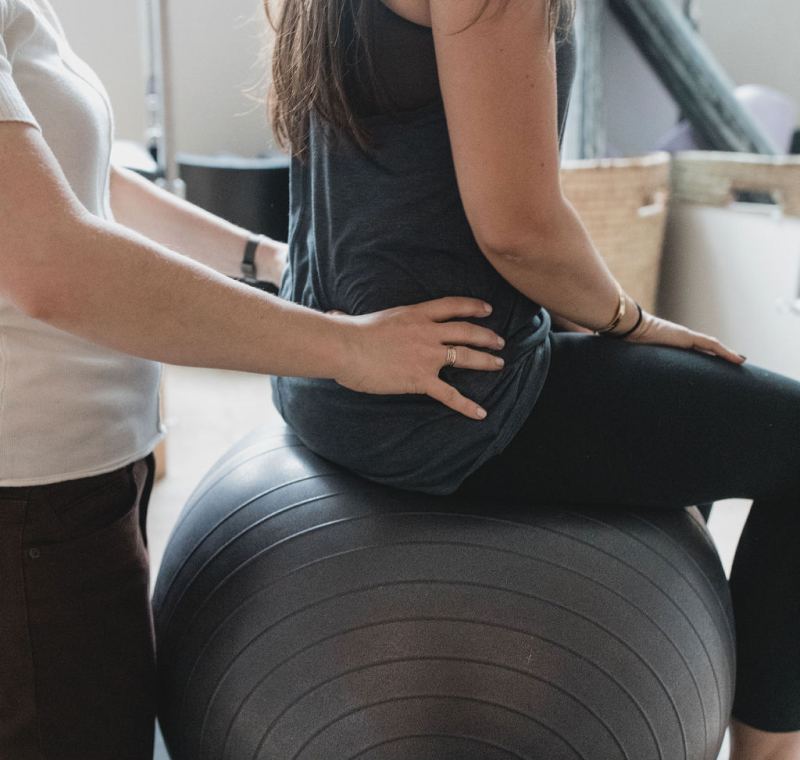
Gentle hands-on techniques to release overactive muscles (adductors, hip flexors, pelvic floor, glutes) and improve joint mobility around the SI joints and pubic symphysis. Patients often report relief in the first session.
2. Stability Training
Once tissue irritation calms, we build single-leg strength, glute activation, and core coordination specific to pregnancy. This is the part that actually keeps the pain from coming back.
3. Movement Modifications
Small changes to how you move — getting in and out of bed, climbing stairs, putting on pants — can dramatically reduce daily pain. We teach you what works for your body.
4. Supportive Tools (When Helpful)
Pelvic support belts (like the Serola or Bauerfeind), KT tape, and other tools can take immediate pressure off symptomatic joints. We help you decide if they're worth using and how to fit them properly.
Will It Get Better After Delivery?
For many patients, yes — but not always, and not always quickly. PT during pregnancy reduces the severity and the postpartum recovery time. Patients who treat PGP during pregnancy tend to return to full function faster after birth.