
The Connection Most Providers Don't Mention
The standard medical conversation around erectile dysfunction (ED) tends to focus on blood flow, hormones, or psychological factors. All of those matter. What's rarely discussed: the pelvic floor muscles — specifically the ischiocavernosus and bulbospongiosus muscles — are mechanically responsible for trapping blood in the penis to maintain an erection. When these muscles are weak, uncoordinated, or chronically tight, erectile function suffers.
This isn't a fringe theory. There's a growing body of research — including multiple randomized trials — showing pelvic floor PT can be as effective as medication for ED rooted in pelvic floor dysfunction. It just isn't part of the standard treatment pathway in most urology practices yet.
When Pelvic Floor PT Helps ED
Weak or Deconditioned Pelvic Floor
The mechanical "lock" that maintains rigid erections requires functional, well-coordinated pelvic floor muscles. If these are weak — from sedentary lifestyle, aging, post-surgical changes, or chronic disuse — strengthening them often restores function.
Hypertonic (Too Tight) Pelvic Floor
Counterintuitively, a chronically tight pelvic floor can also cause ED. Tight muscles can't contract effectively when needed (similar to how a permanently flexed bicep can't flex further) and tight muscles make it difficult to allow blood flow in. Down-training and then building back these muscles with correct coordination often resolves the issue.
Post-Prostate Surgery ED
Erectile dysfunction is common after prostatectomy. Pelvic floor PT — ideally started before surgery and continued after — significantly improves both timeline and degree of recovery. Many men regain function months sooner than expected.
ED That Comes With Pelvic Pain
If ED comes alongside perineal, testicular, or other pelvic pain, the pelvic floor is almost certainly involved. Treating the broader pelvic floor dysfunction usually improves ED as a side effect.
ED in Otherwise Healthy Men
If you're young, fit, healthy, and have no obvious vascular or hormonal cause for ED — but you cycle a lot, lift heavily, sit for long hours, or hold stress — pelvic floor dysfunction is one of the most common overlooked causes.
How We Treat It
1. Full Evaluation
We assess pelvic floor strength, coordination, tone, and endurance. We also evaluate hip, abdominal, and core function — all of which interact with sexual function. We discuss your symptoms, history, and goals openly and confidentially.
2. Strengthening or Down-Training (Depending on Findings)
If the muscles are weak, we strengthen them with targeted, progressive exercises — not generic kegels, but specific patterns for sexual function. If they're hypertonic, we focus on release work, manual therapy, breath, and learning to relax these muscles.
3. Manual Therapy When Indicated
For tight or trigger-pointed muscles, internal (rectal) and external manual therapy releases them directly. We move at your pace and always with consent.
4. Lifestyle and Habit Coaching
Cycling adjustments, sitting position, lifting form, stress management. Each of these influences pelvic floor function and, by extension, erectile function.
5. Integration With Medical Care
Pelvic floor PT works alongside other ED treatments. If you're on medication, PT addresses the underlying muscle component while medication addresses other factors. Many men eventually reduce or stop medication once the pelvic floor work has taken hold. We coordinate with urologists when appropriate.
What Your First Visit Looks Like
Most men put this appointment off for months, then tell us it was easier than they expected. Here's what happens.
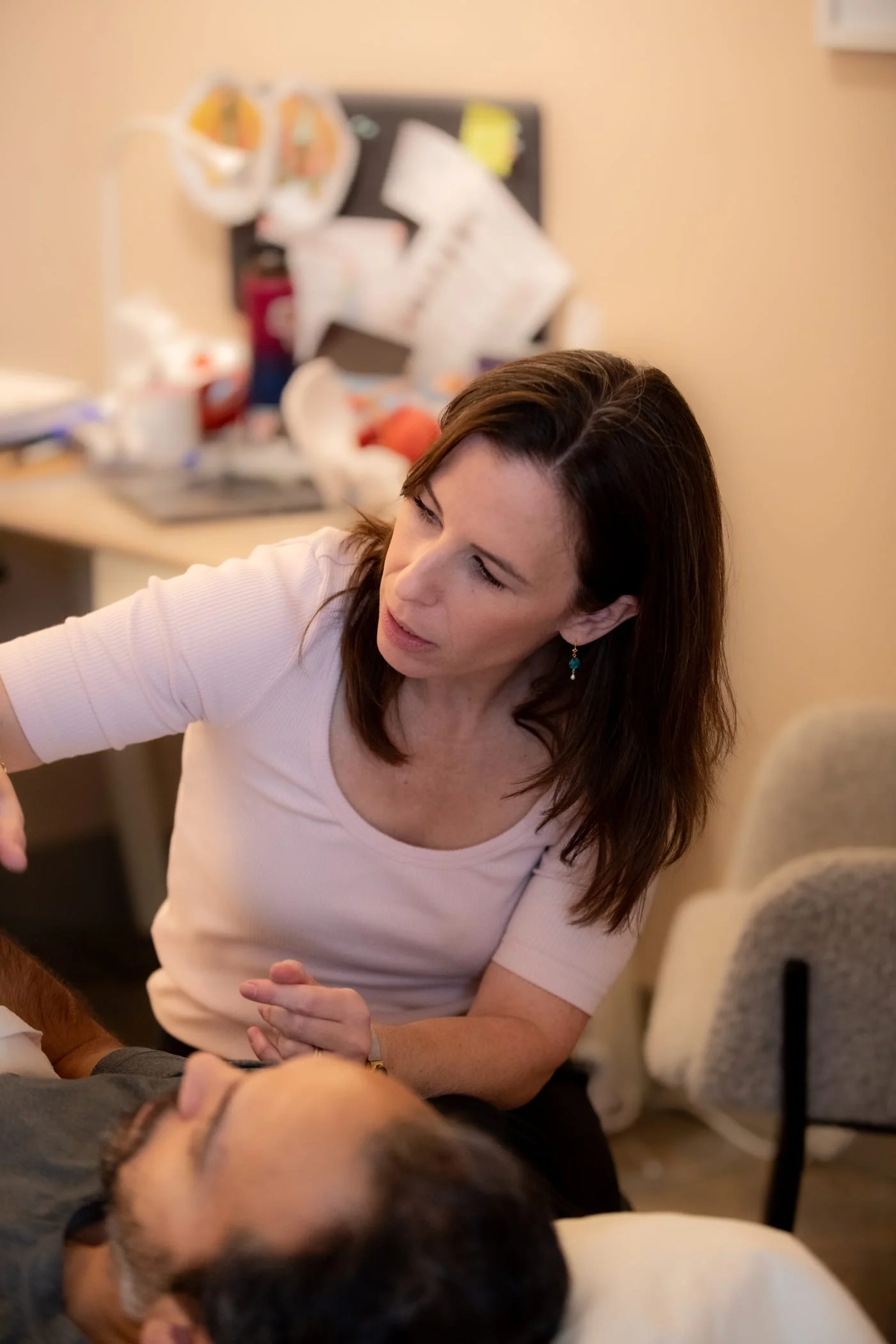
Your evaluation is a full 60 minutes, one-on-one, in a private treatment room. It starts with a conversation — your history, any workups you've had, what you want to get back to. Then we assess this like any other musculoskeletal problem — as a muscle, blood-flow, and nervous-system question. We look at hips, back, core, breath mechanics, and movement patterns, then assess the pelvic floor muscles externally for tone, strength, and coordination.
An internal (rectal) assessment gives the most direct read on the deep pelvic floor — it's optional, consent-based, and never required on a first visit. We use biofeedback where it's helpful — objective data rather than guesswork. And if your ED comes with pelvic, perineal, or testicular pain, the same evaluation screens for male pelvic pain (CPPS) — including what's often labeled chronic prostatitis — because the two frequently travel together. Either way, you leave knowing whether your pelvic floor looks like part of the problem, and what the plan is.
What to Expect
For ED with a pelvic floor component, many men see meaningful improvement within 8–12 weeks of consistent work. Pelvic floor training has a growing evidence base for erectile function, and it works on the muscular and blood-flow mechanics directly rather than only managing the symptom. Whether it's enough on its own depends on what's driving your ED, which is exactly what the evaluation sorts out.
Why Most Men Don't Hear About This
Urology is structured around pharmaceutical and procedural solutions. Pelvic floor PT for ED has been well-studied but is still not standard referral practice in most clinics. The result is that thousands of men take medication for years without ever being told there's a non-pharmaceutical option that may address the actual cause. We don't know if PT alone will solve your ED — that depends on what's driving it — but for many men, it's the missing piece.
Frequently Asked Questions
Can pelvic floor PT actually help with ED?
When there's a pelvic floor component — yes. Determining whether there is one is exactly what the evaluation is for. ED can involve vascular, hormonal, neurological, psychological, and muscular factors, often in combination; PT addresses the muscular and blood-flow piece. If your assessment points somewhere else, we'll say so and help you get to the right provider.
Is this awkward?
Less than you're imagining. A quarter of our patients are men, and we approach erectile function like any other muscle and coordination problem — clear assessment, clear plan. Visits are private and one-on-one, nothing happens without your consent, and the matter-of-fact clinical framing takes most of the awkwardness out of it.
Do I still need a urologist?
If you haven't had a medical workup, get one — ED can be an early signal of cardiovascular or hormonal issues that deserve screening, and PT works alongside that evaluation rather than replacing it. We coordinate with urologists and physicians routinely.
Can I do PT while taking ED medication?
Yes. Medication and pelvic floor work on different parts of the problem, and one doesn't interfere with the other.
What if my pelvic floor turns out not to be the problem?
Then you'll know — which is worth something on its own. If the evaluation doesn't find meaningful pelvic floor dysfunction, we won't string you along with visits. We'll tell you what we found, what we ruled out, and where to look next.