
The Misdiagnosis Problem
If you're a man with pelvic pain, urinary symptoms, perineal discomfort, or pain in the testicles, penis, or rectum, you've likely been told you have "prostatitis" or a "prostate infection." Many men have been on multiple courses of antibiotics with little to no improvement.
Here's what the research actually shows: only about 5–10% of "prostatitis" cases are bacterial. The other 90–95% are Chronic Pelvic Pain Syndrome — a musculoskeletal and neuromuscular condition rooted in the pelvic floor, not an infection. Antibiotics don't fix it because there's nothing for them to kill.
This is one of the most common misdiagnoses in men's health. And it leaves men cycling through providers, treatments, and frustration for years.
Symptoms We See
- Pain or aching in the perineum (between the scrotum and anus)
- Testicular pain or aching (often one side, often migratory)
- Penile pain — at the tip, base, or shaft
- Rectal pain or pressure
- Pain with sitting, especially on hard surfaces
- Urinary urgency, frequency, or hesitancy
- A weak or interrupted urine stream
- Burning during or after urination — without infection on culture
- Painful ejaculation
- Erectile difficulty associated with pain
- Pain that's worse after exercise, sex, or long sitting
What's Actually Happening
The pelvic floor in men, just like in women, is a sling of muscles that supports the bladder, prostate, and rectum and wraps around the urethra. When these muscles are chronically tight or in spasm, they refer pain across the entire pelvic region — and they put pressure on the nerves and structures they surround. They can mimic prostate symptoms perfectly.
The tension usually has identifiable causes: chronic stress, prolonged sitting, cycling, weightlifting habits that over-recruit the pelvic floor, past pelvic injury, surgery, or a single inflammatory episode that the body never quite resolved.
How We Treat It
1. Full Musculoskeletal Evaluation
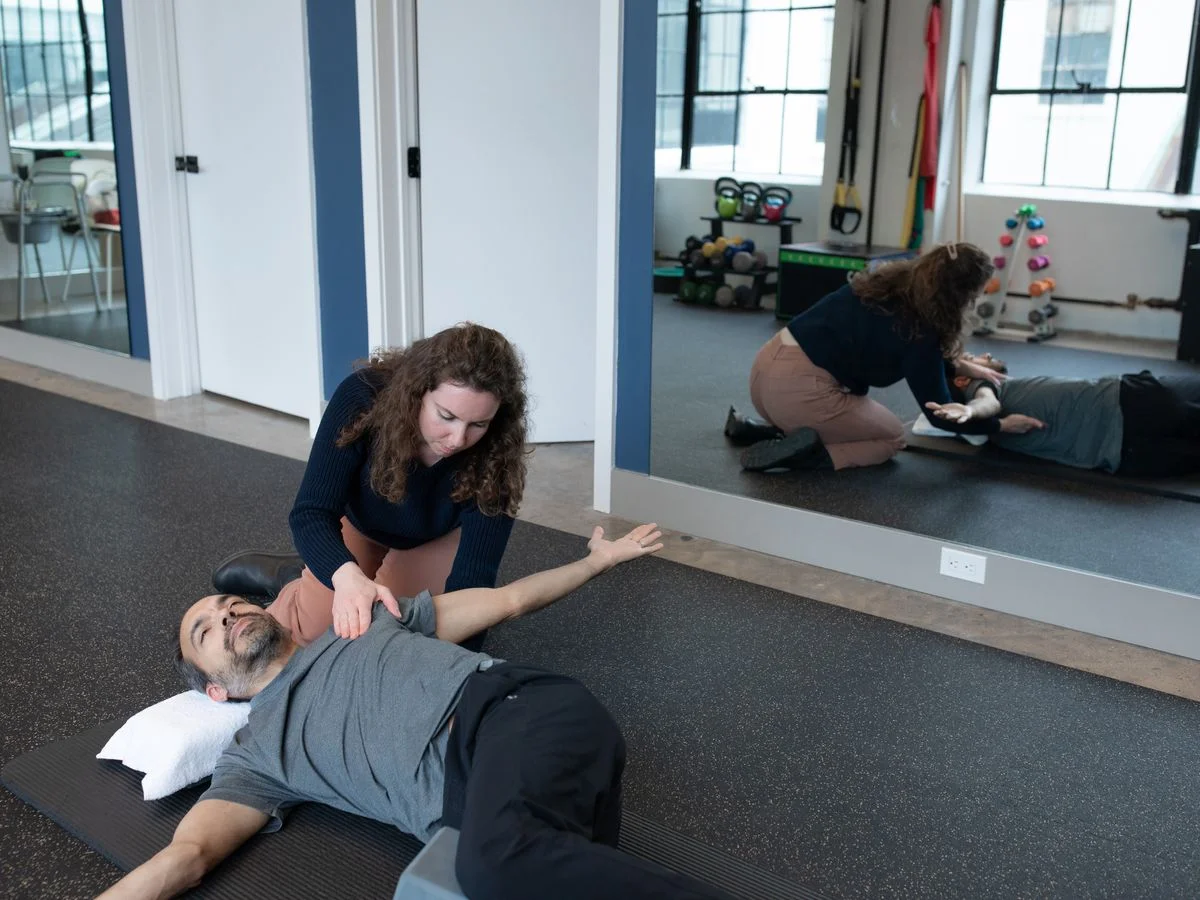
Your first visit assesses pelvic floor tone and tension, evaluates surrounding muscles (abdomen, hips, glutes, inner thigh), checks posture and breath patterns, looks at habits that may be perpetuating the tension (sitting, cycling, lifting), and identifies any nerve involvement.
2. Internal and External Manual Therapy
The most effective treatment for pelvic floor tension is hands-on release. This can be done externally (perineum, abdomen, glutes) and internally (rectally) — the rectal exam is the gold standard for assessing and treating the deep pelvic floor muscles directly. We move at your pace and always with consent.
3. Down-training the Pelvic Floor
We teach you how to relax these muscles — through breath, biofeedback, specific positions and exercises, and at-home stretches. Most men have spent years unconsciously holding tension here and have no idea how to release it. The relief when they finally do is significant.
4. Lifestyle Modifications
Sitting posture, cycling adjustments (saddle, position, time), lifting form, stress management techniques. The factors that drove the tension into being need to be addressed alongside the muscle work.
5. Nervous System Work
For long-standing cases, the nervous system itself has become reactive. We work on calming this through breath, vagal toning, and education about pain neuroscience.
What to Expect
Most men see meaningful improvement within 6–10 visits. Full resolution typically takes 3–4 months of consistent work. The progress is usually steady and noticeable — better days more frequently, worse days less intense, symptoms gradually fading.
Why Men Don't Find This Sooner
Three reasons:
- Pelvic floor PT for men is dramatically under-known among urologists and PCPs — the standard model still treats this as a prostate issue first.
- Men talk less openly about pelvic symptoms. By the time most patients find us, they've been suffering for 1–5 years.
- The internal portion of the work feels intimidating before patients understand it. In practice, it's brief, clinical, and not uncomfortable for most men.
If any of this sounds like what you've been dealing with, we'd love to evaluate you. Most of our male patients tell us they wish they'd found this years earlier.
What Your First Visit Looks Like
Bring your history — the antibiotic courses, the urine cultures, any imaging or procedure reports. We review all of it with you. Your visit is a full 60 minutes, one-on-one with your therapist at our Dobbs Ferry office, and nothing about it is rushed.
The exam starts wide — back, hips, core, breath mechanics, movement patterns — and then narrows to the muscles of the pelvis itself. When the pelvic floor is the driver, pressing on a specific muscle often recreates that familiar perineal ache or urinary urge.
An internal (rectal) assessment gives the most direct information, but it is always optional, always consent-based, and never required on a first visit. Everything is explained before it happens. A muscle problem in the pelvic floor is as mechanical — and as treatable — as a muscle problem in a hamstring.
Frequently Asked Questions About Chronic Prostatitis
I've taken multiple rounds of antibiotics and nothing changed — why?
Antibiotics do one job: clear infection. In most men carrying this diagnosis, cultures never actually show an infection — so there was nothing for the antibiotics to treat. That is not a failure by you or your doctor. It is a sign the driver is muscular and nervous-system based, which is exactly the piece pelvic floor PT addresses.
Is this a prostate problem or a muscle problem?
For most men in the chronic category, it is muscular. The pelvic floor muscles wrap around the urethra and sit directly against the prostate, and when they are chronically tight they produce perineal pain, urgency, and a weak stream — the same list usually blamed on the prostate. Our male pelvic pain (CPPS) page covers this in more detail.
Do I need to stop seeing my urologist?
No — please don't. Your urologist rules out infection and other medical causes, which is essential, and some men benefit from medical management alongside PT. We work with your urologist, not instead of them, and we're glad to keep them in the loop.
Do I have to have an internal exam?
No. It is optional, consent-based, and never required on a first visit. However, internal assessment and treatment is the best way to get a full picture and efficient treatment of the targeted muscles.
How quickly can I be seen?
Most patients are seen within a week. If you would rather talk before booking, we offer a free 15-minute phone or video consultation — tell us what has been going on, and we will tell you honestly whether pelvic floor PT for men is the right next step.