
What Changes at Menopause
Declining estrogen during perimenopause and menopause affects every tissue in the body — including the pelvic floor, vaginal walls, urethra, and bladder. The technical term for these tissue changes is genitourinary syndrome of menopause (GSM), and it affects up to 50-70% of postmenopausal women.
The changes are gradual, often start in perimenopause (years before periods stop), and tend to worsen over time without intervention. Vaginal estrogen helps significantly for many patients — talk to your OBGYN or PCP — but estrogen alone doesn't address muscle weakness, scar restriction, posture changes, or learned guarding patterns. That's where PT comes in.
Common Menopause-Related Pelvic Symptoms
- Vaginal dryness, burning, or irritation
- Painful intercourse (often described as "tearing" or "sandpaper")
- Urinary urgency and frequency
- Urinary incontinence (especially during exercise or with sneezing)
- Recurrent urinary tract infections
- Pelvic organ prolapse worsening
- Reduced sexual sensation or arousal
- Pelvic floor muscle tension and pain
How We Treat Menopause-Related Pelvic Floor Symptoms
1. Tissue Health Assessment
We assess vaginal tissue quality, pelvic floor muscle strength and coordination, hip and core function, and bladder behavior to identify what's actually driving your specific symptoms.
2. Manual Therapy & Tissue Mobilization
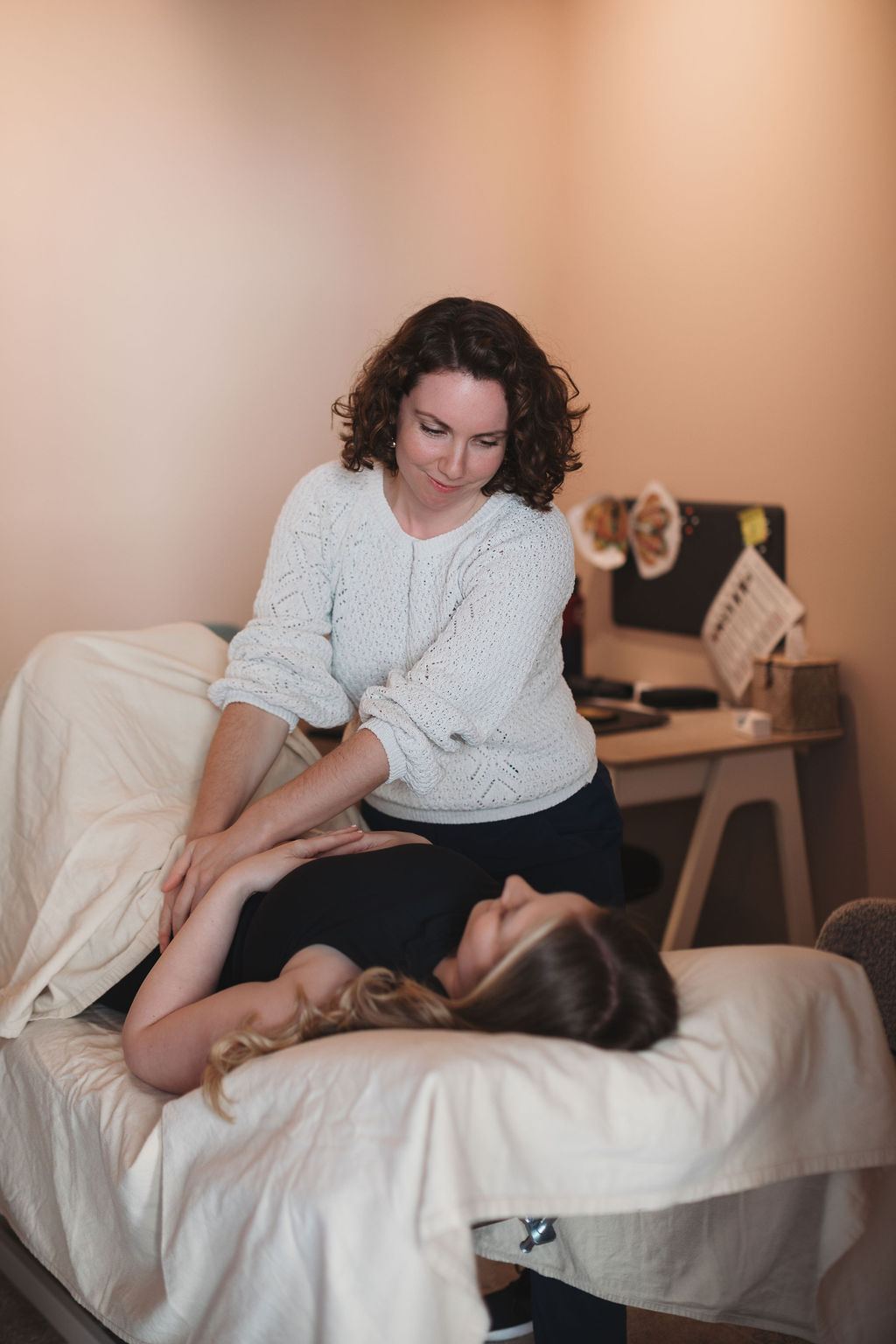
Internal and external manual therapy can release tight tissue, reduce scar restriction, and increase blood flow to the pelvic floor — supporting tissue health alongside any hormonal therapy you may be using.
3. Strengthening & Bladder Retraining
Targeted pelvic floor strengthening (not just generic Kegels) restores support for the bladder, urethra, and pelvic organs. For urinary urgency, bladder training protocols can dramatically reduce symptoms in 4-6 weeks.
4. Sexual Health Restoration
Painful intercourse during menopause is treatable. We address tissue restriction, muscle tension, breath patterns, and (when relevant) sensation work to restore comfortable intimacy.
5. Bone Health & Functional Strength
Estrogen loss accelerates bone density loss. We integrate progressive resistance training and weight-bearing work into your program to support bone, muscle, and pelvic floor health long-term.
What About Hormone Therapy?
Vaginal estrogen (creams, suppositories, or rings) is highly effective for genitourinary symptoms and has an excellent safety profile for most patients. We are not prescribers, but we work closely with our patients' OBGYNs and PCPs to integrate PT with any hormonal therapy you're using. Many patients benefit from both.
Is It Too Late to Start?
No. We see patients in their 60s, 70s, and 80s who experience significant relief and functional improvement. Pelvic tissue can be retrained at any age. We gladly accept Medicare so cost is not a barrier.