
When Constipation Is a Pelvic Floor Problem
Constipation is a hugely common complaint with many possible drivers — diet, hydration, hormones, medications, neurological conditions, and more. For a significant portion of patients, though, the missing piece is pelvic floor dysfunction.
Normal bowel emptying requires the pelvic floor and external anal sphincter to relax while the abdominal wall and rectum contract. If the pelvic floor doesn't relax — or worse, contracts when it should relax — you can be doing everything else right and still struggle.
This pattern, called dyssynergic defecation, obstructive defecation or pelvic floor outlet dysfunction, affects roughly half of patients with chronic constipation. It is diagnosable, common, and highly responsive to treatment, especially when incorporating biofeedback and/or rectal balloon training.
Signs Your Constipation May Be Pelvic Floor-Related
- Significant straining even when stool is soft
- Feeling of incomplete emptying after a bowel movement
- Need to use fingers or pressure to help evacuation (splinting)
- Sensation of obstruction or blockage at the anus
- Long times spent on the toilet without success
- Pain or burning with bowel movements
- Symptoms that haven't improved despite fiber, water, and medication
- History of pelvic surgery, childbirth, sexual trauma, or chronic pelvic pain
Other Bowel Conditions We Treat
- Fecal incontinence (involuntary stool loss)
- Bowel urgency and frequency
- IBS-related pelvic pain and tension
- Hemorrhoids and rectal pain related to chronic straining
- Post-surgical bowel changes (post-hysterectomy, post-prolapse repair)
- Hirschsprung's, pediatric encopresis, and other developmental bowel issues
How We Treat Bowel Dysfunction
1. Detailed Assessment
We evaluate pelvic floor muscle coordination during simulated defecation, abdominal wall function, posture, bowel habits, hydration, dietary patterns, and any history that may be relevant.
2. Pelvic Floor Coordination Training
The key for dyssynergic defecation is teaching the pelvic floor to relax on demand and coordinate with abdominal pushing. Biofeedback is often very helpful here — patients learn to see and feel the pattern they need to develop.
3. Manual Therapy
Visceral mobilization (gentle manual work on the abdominal organs), pelvic floor release, and abdominal scar work can dramatically improve transit and reduce pelvic floor guarding.
4. Toileting Mechanics
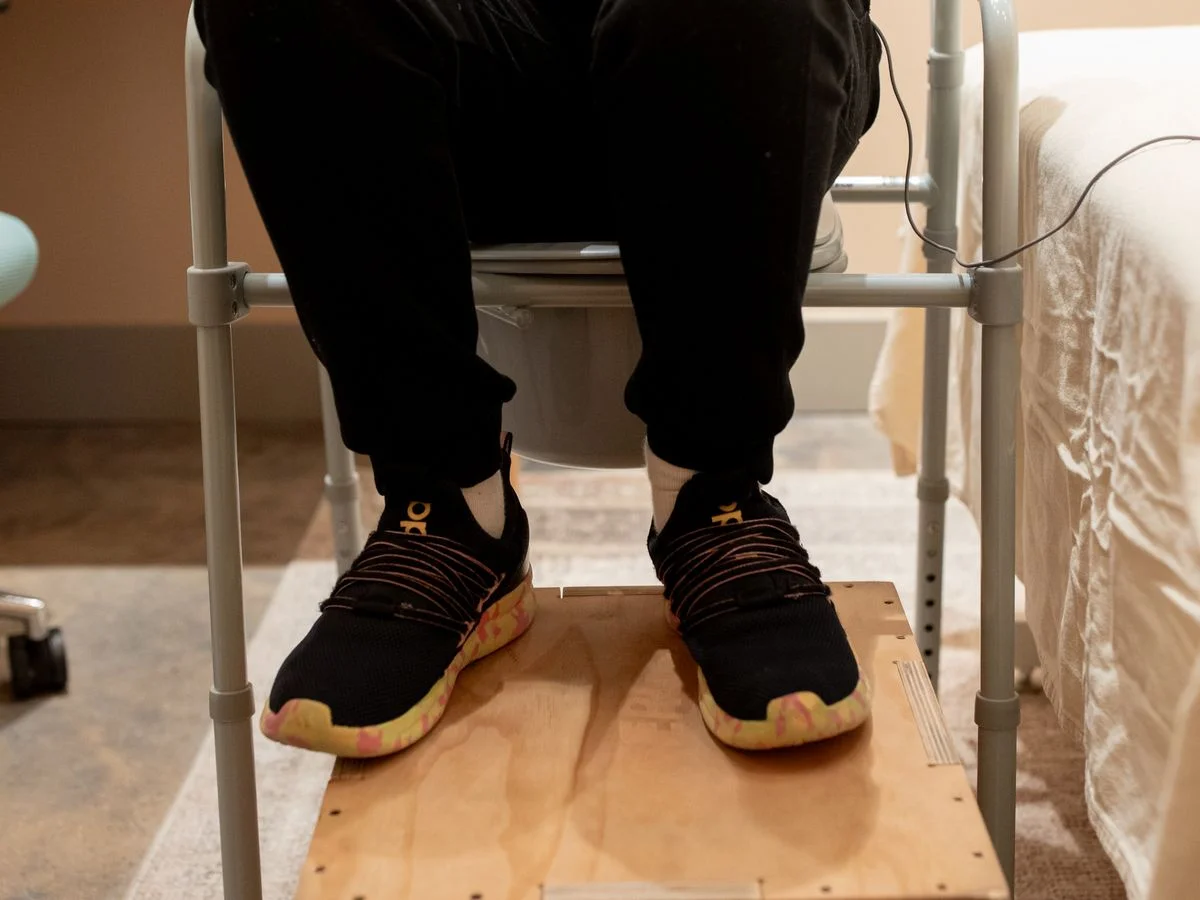
Position matters — a lot. Footstool height, lean angle, breath pattern, and timing can be the difference between productive and frustrating bathroom time. We teach the specifics.
5. Habit and Lifestyle Coaching
We integrate the basics: hydration, fiber, movement, meal timing, and how to honor your body's signals. None of this is novel, but it works when combined with pelvic floor coordination.
6. Collaboration with GI
For complex cases, we work closely with gastroenterologists, pelvic medicine specialists, and (when appropriate) dietitians. Many patients benefit from this team approach.
What About Pediatric Bowel Issues?
We treat children with chronic constipation, encopresis (involuntary stooling related to constipation), and other pelvic floor-related bowel dysfunction. Fiana Tulchinskaya has specific pediatric bowel and bladder training and leads much of this work.